


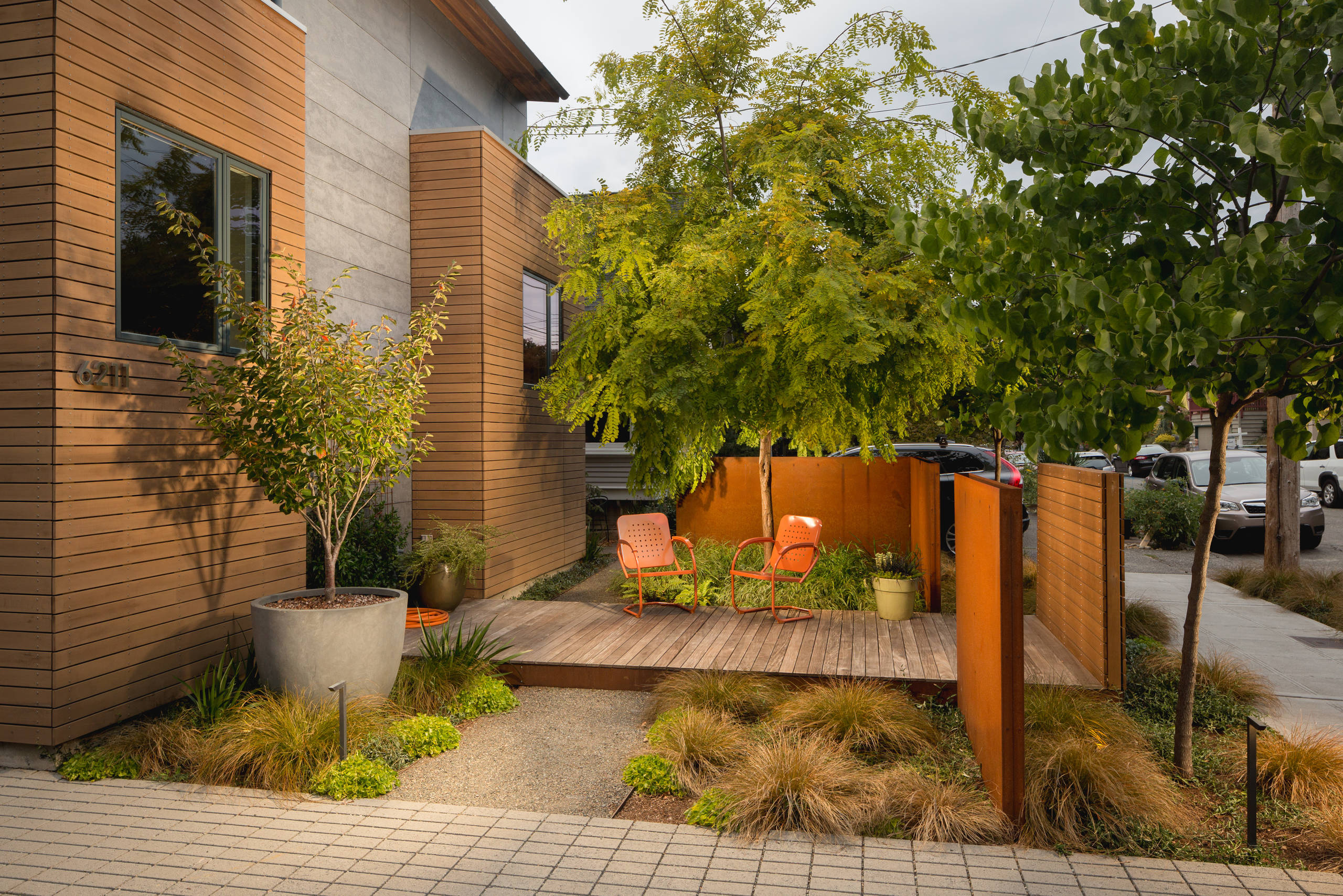

3. Hedges. When choosing a plant for a hedge, consider whether you’d like total privacy in the form of a solid hedge or less privacy with one that is lighter and airier.
For maximum privacy and sound suppression, select evergreens with a dense growth habit, such as arborvitae (Thuja occidentalis, USDA zones 3 to 7; find your zone), ‘Spartan’ Chinese juniper (Juniperus chinensis ‘Spartan’, zones 4 to 9) or cherry laurel (Prunus laurocerasus, zones 6 to 8), and space them half of the recommended planting distance apart.
For lighter screens that allow light to pass through, choose evergreens such as fern pine (Podocarpus gracilior, zones 8 to 10) or ‘Silver Sheen’ kōhūhū (Pittosporum tenuifolium ‘Silver Sheen’, zones 8 to 11).


6. Slatted screening. Create a feeling of enclosure and interrupt views from neighboring homes with a more modern take on a traditional pergola.
The designers of this Los Angeles backyard used painted steel tubing mounted on posts to create a slatted privacy covering for a backyard lounge.

7. Laser-cut metal. Becoming more common in garden design, artistic screens made of laser-cut metal can be used to separate garden rooms, screen a hot tub or hide landscape bins. Mount them a few inches in front of a wall and add lights in the evening to appreciate the shadows cast by the metalwork.
For this home in Perth, Australia, a laser-cut screen with a swirling, almost nautilus-like design provides privacy at the front entrance.
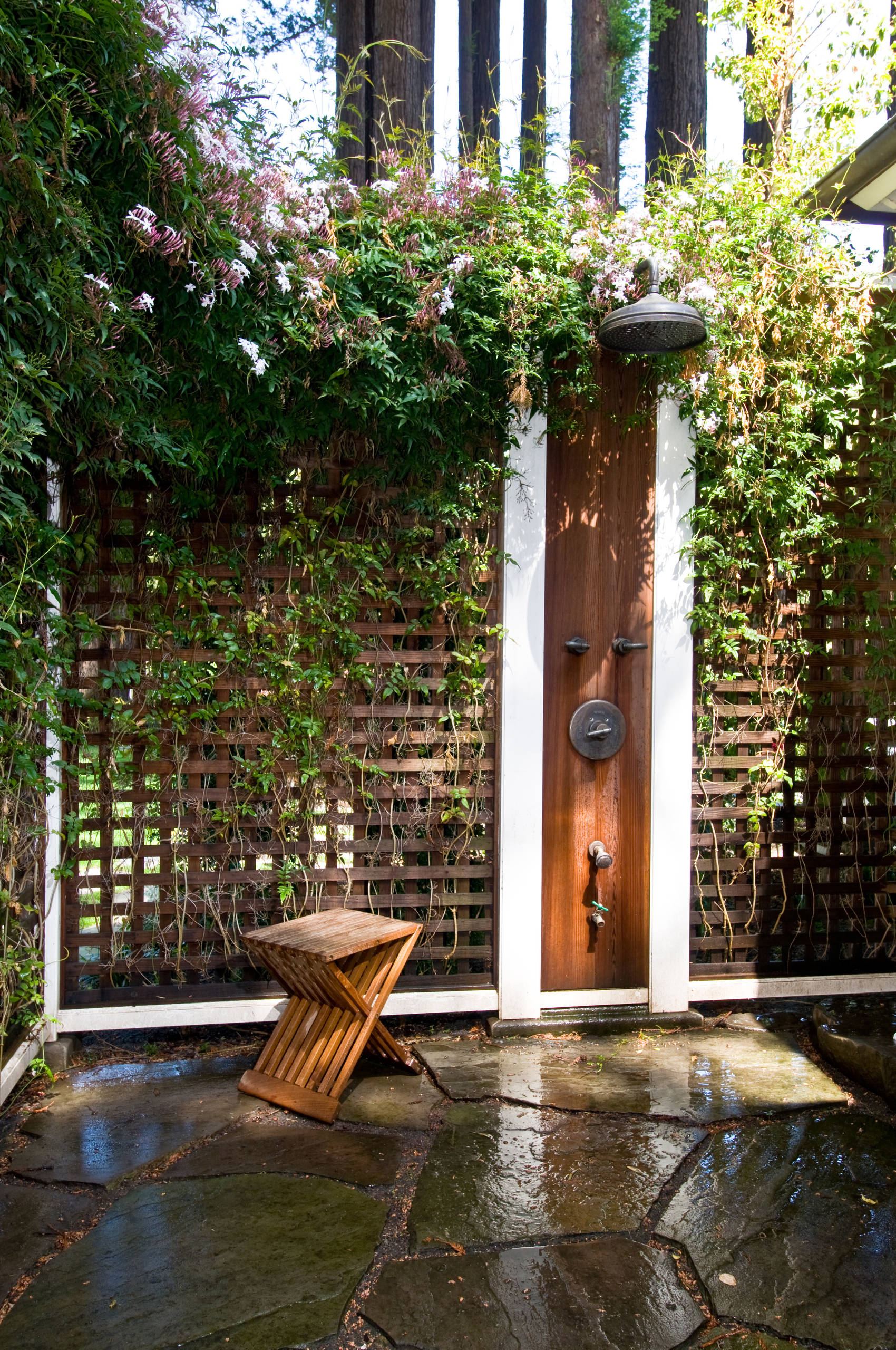
8. Wood lattice. Inexpensive and widely available, crisscrossing wood lattice is a great screen material for partial privacy.
To more fully conceal an outdoor shower, the designers of this Woodside, California, backyard planted fragrant pink jasmine (Jasminum polyanthum, zones 8 to 10) to fill in the gaps in the lattice. The spaces between the wood slats allow air to move freely and light to filter through to help dry the area after a rinse.


11. Layered materials. Dense materials such as metal, stone, brick and concrete are by far the most effective at absorbing sound waves from traffic or industrial machines. Layer with lighter materials, such as hedges and wood fences, to block more sound than if the materials were used individually. Adding a more peaceful sound such as the splash of water can also help.
The designer of this Seattle courtyard did both: A free-standing metal wall with a built-in fountain adds privacy from neighbors and cuts the noise from a nearby street, while the falling water introduces a soothing sound.


